The Mental Load in Relationships: Why It Leads to Resentment, Distance, and Disconnection
Why Do We Keep Fighting About the Same Things?
Many couples come into therapy feeling stuck in the same argument:
One partner feels overwhelmed, unseen, and constantly responsible.
The other feels criticized, shut out, or like nothing they do is enough.
The argument often looks like it’s about:
chores
planning
parenting
who does what
But underneath, it’s something deeper.
It’s the mental load.
What Is the Mental Load?
The mental load is the invisible responsibility of:
keeping track of what needs to be done
anticipating needs
planning ahead
remembering details
managing the emotional and logistical flow of the household
It’s not just doing tasks, it’s carrying the responsibility for everything.
In many relationships, one partner, often the woman, is holding most of it.
At the same time, many men begin to notice a shift. Their partner seems more frustrated, more distant, and less emotionally or physically available. What often follows is a gradual move into what feels like “roommate mode,” where connection decreases and sexual intimacy fades.
This experience impacts men deeply. Without understanding what’s driving the change, it can feel personal, like rejection or loss of attraction. Over time, this can create resentment on both sides, leading to even more emotional and physical distance.
How the Mental Load Argument Begins
It rarely starts as resentment.
It starts as:
stepping in to help
taking initiative
trying to keep things running smoothly
Over time, this turns into:
being the default decision-maker
being the one who notices everything
being the one who has to ask, remind, or manage
Eventually, the dynamic shifts:
One partner becomes the manager.
The other becomes the helper.
And that shift quietly changes the relationship.
Why This Becomes So Emotionally Charged
The conflict isn’t just about tasks, it’s about meaning.
The partner carrying the mental load often feels:
alone in responsibility
unseen or unappreciated
like they can’t relax
resentful that they have to “manage” their partner
The other partner often feels:
like they are being constantly corrected
like they can’t do things “right”
criticized or micromanaged
pushed away or shut down
Both are having real emotional experiences, but they are interpreting each other incorrectly.
The Long-Term Impact (Especially for Women)
When the mental load stays unbalanced over time, something deeper starts to happen.
Many women begin to:
feel chronically overwhelmed
lose a sense of partnership
feel more like a parent than a partner
emotionally disconnect to cope
This isn’t sudden, it’s gradual.
And often, it’s silent.
Why Women Start to Pull Away
Emotional withdrawal doesn’t usually come from a lack of love.
It comes from:
exhaustion
unmet needs
repeated conversations that don’t lead to change
At a certain point, many women stop:
asking
explaining
trying to fix it
They start conserving energy instead.
From the outside, it can look like:
distance
irritability
lack of interest
reduced emotional or physical intimacy
But internally, it often feels like:
“I don’t have anything left to give and I can’t give one more thing to one more person.”
What Men Often Experience
When this shift happens, many men notice:
less affection
less sexual intimacy
less engagement
more tension or criticism
But without understanding the buildup, it can feel sudden and confusing.
Common interpretations are:
“She’s not attracted to me anymore”
“Nothing I do is good enough”
“She’s always upset with me”
So they may:
withdraw
become defensive
try less (to avoid conflict)
Which unintentionally reinforces the original problem.
How Resentment Builds on Both Sides
At this stage, both partners are hurting, and both feel misunderstood.
One is thinking:
“I’ve been carrying everything for years.”
The other is thinking:
“I can’t win, so why try?”
This is where:
communication breaks down
intimacy declines
emotional safety erodes
And the relationship starts to feel like a cycle instead of a partnership.
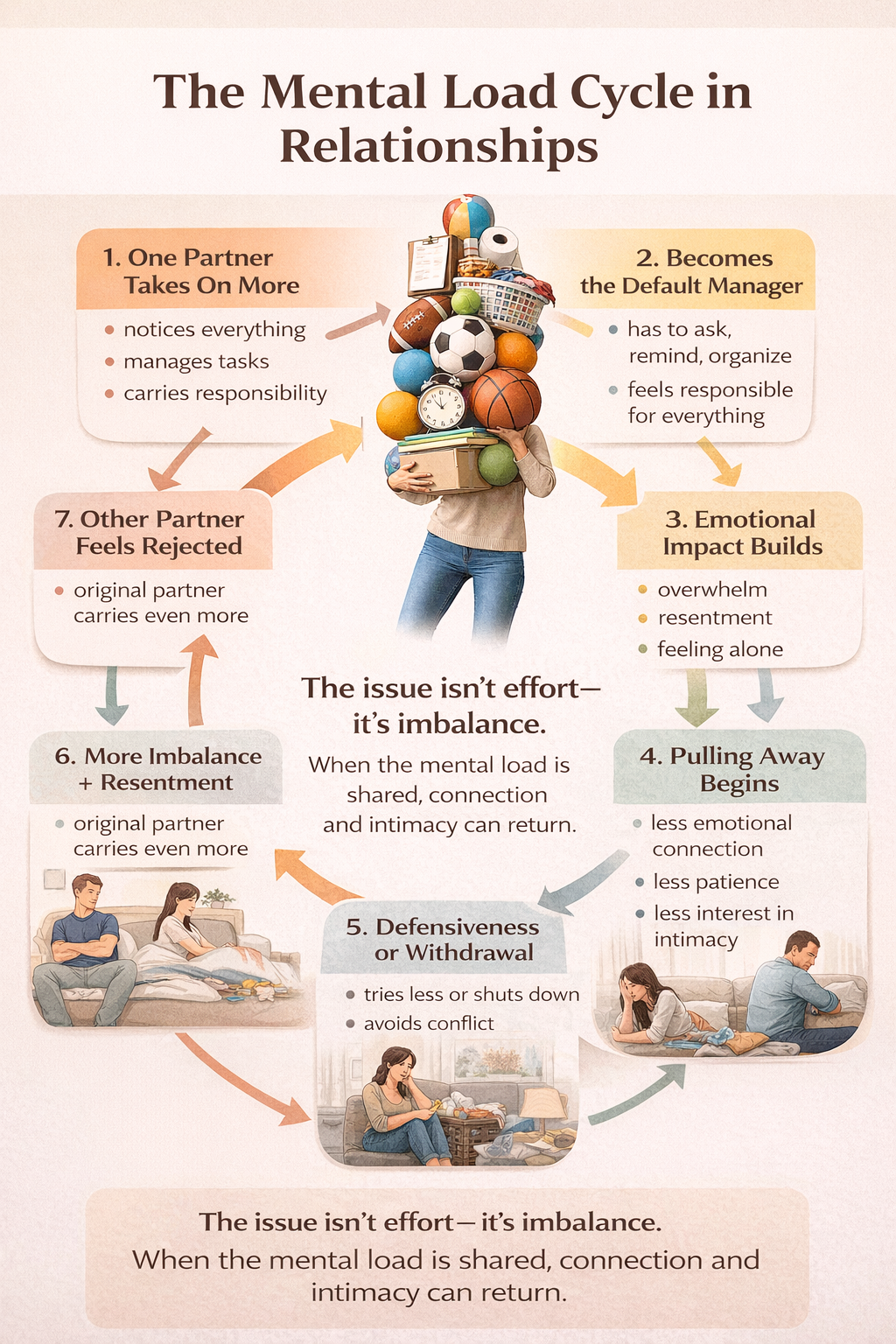
This cycle shows how carrying too much responsibility over time can lead to resentment, distance, and disconnection in relationships.
Many couples don’t realize they’re stuck in a pattern like this, where the mental load in the relationship quietly creates distance and resentment over time.
Why This Pattern Is So Hard to Fix Alone
The mental load dynamic isn’t just about behavior, it’s about:
roles
expectations
emotional meaning
communication patterns
Without outside support, couples often:
argue about surface issues
miss the underlying dynamic
repeat the same conversations
How Couples Therapy Helps
In couples therapy, this dynamic can be unpacked in a way that feels clearer and less reactive.
The goal is not:
assigning blame
perfectly dividing tasks
The goal is:
restoring a sense of partnership
reducing resentment
helping both partners feel understood
creating more balance (both practical and emotional)
This includes:
identifying invisible responsibilities
shifting patterns of communication
rebuilding emotional connection
You’re Not the Only Ones Experiencing This
If this dynamic feels familiar, you’re not alone.
The mental load is one of the most common sources of conflict in long-term relationships, especially when both partners are overwhelmed, anxious, lonely, and trying to keep life functioning.
Looking for Support?
If you and your partner feel stuck in this pattern, couples counseling can help you understand what’s happening beneath the surface and begin to shift it. I support couples in Michigan learn to rebalance, reconnect, and feel relief.