Why Do I Keep Checking My Partner's Phone After an Affair?
"I hate who I've become."
It's something I hear often after an affair. "I've never been the kind of person who snoops. I've never wanted to look through his phone. I've never questioned everything she has told me. And now I don't even recognize myself."
If this sounds familiar, I want you to know something: checking your partner's phone doesn't necessarily mean you've become controlling, paranoid, or obsessive. More often than not, it's a sign that your sense of safety has been profoundly shaken.
Why You Feel the Need to Check Your Partner's Phone
Before the affair, you probably didn't feel the need to verify everything your partner told you. If they said they were working late, you believed them. If they went out with friends, you assumed they were telling the truth. Trust allowed your mind to rest because your reality matched what you were experiencing.
After an affair, everything changes. The person you depended on to help you feel emotionally safe has also become the person who made you question your own reality. Suddenly, your mind no longer trusts what it once accepted without hesitation. Of course it wants reassurance. Of course it wants to verify. Looking through your partner's phone, checking phone records, scrolling social media, or paying closer attention to changes in behavior are all attempts to answer one painful question: Is it happening again? Has it stopped?
Why Checking Your Partner's Phone Brings Only Temporary Relief
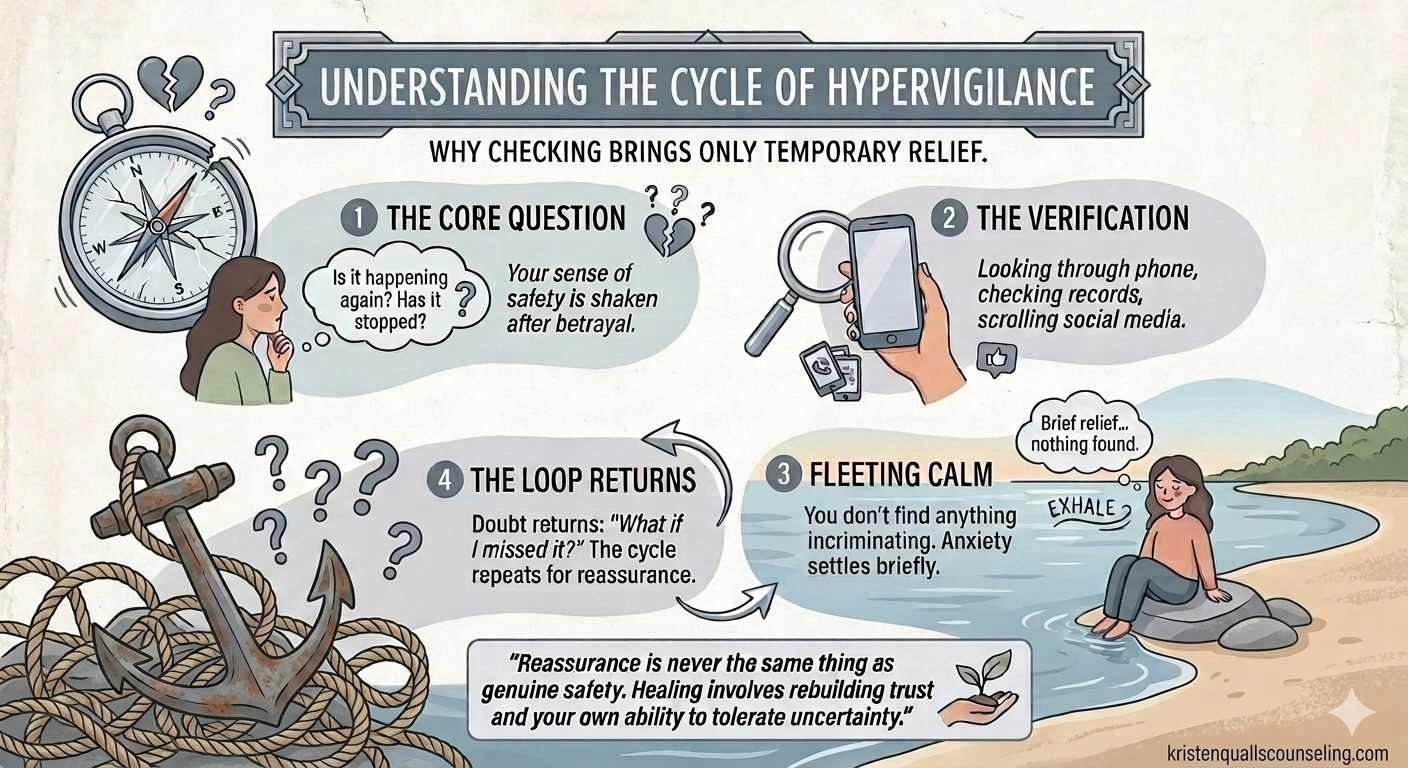
Understanding why checking your partner's phone brings only temporary, fleeting relief.
One of the reasons checking can become so difficult to stop is because it often works, at least for a few minutes.
You look through your partner's phone and don't find anything. Your anxiety settles, your shoulders relax, and you feel a brief sense of relief. Then, before long, another thought creeps in. What if they deleted something? What if they're using another app? What if I simply missed it?
Now you're right back where you started.
The checking isn't the problem, it's your mind's attempt to calm itself after a profound betrayal. The difficulty is that the relief never lasts. Each time anxiety returns, your brain learns that checking is the fastest way to feel better. Over time, that cycle becomes exhausting because you're constantly searching for reassurance, but reassurance is never the same thing as genuine safety.
Is It Healthy to Check Your Partner's Phone After an Affair?
People often ask me whether checking their partner's phone is healthy or unhealthy. I don't think that's the best question.
In the early stages after discovery, transparency is often an essential part of rebuilding trust, so checking is normal and essential. A partner who is genuinely committed to repairing the relationship may willingly share passwords, answer questions honestly, and allow access to their devices. Those aren't acts of control, they're acts of accountability designed to help restore credibility after trust has been broken.
The more important question is this: What is the checking accomplishing? Is it helping you gather information you genuinely need to understand what happened, or is it temporarily calming anxiety that returns a minutes later? Those are very different experiences, and recognizing the difference is an important part of healing.
When Checking Stops Helping and Starts Keeping You Stuck
There often comes a point where checking no longer provides new information. Instead, it becomes part of the cycle itself. You check, your anxiety decreases for a little while, and then uncertainty returns. Before long, your life begins revolving around the next opportunity to feel reassured.
Over time, this can unintentionally reinforce the belief that you're only safe if you're constantly watching. That's an incredibly heavy burden to carry. Healing isn't about pretending to trust someone before they've earned it, nor is it about forcing yourself to stop checking before you're ready. It's about slowly rebuilding trust while also rebuilding confidence in your own ability to recognize reality, tolerate uncertainty, and know that you'll be okay regardless of what you discover.
How Affair Recovery Counseling Can Help
If you find yourself checking your partner's phone, replaying conversations, or constantly looking for signs that another affair is happening, it doesn't mean you're broken. These behaviors often develop because your mind is trying to protect you after your reality has been profoundly disrupted.
In affair recovery counseling, my role isn't to tell you to "just stop checking." It's to help you understand what those checking behaviors are communicating, determine what transparency is genuinely necessary for healing, and know when the search for reassurance is beginning to keep you emotionally stuck.
Together, we'll work toward rebuilding a sense of safety that doesn't depend on constant vigilance, so you can begin living your life again instead of spending it searching for the next piece of evidence. I would be honored to help you through this.
Whether you are trying to decide if your relationship can heal or you are already committed to rebuilding together, support is available. If you are ready to begin healing after infidelity, I invite you to reach out and schedule a consultation.